
How It Works: Getting Air Duct Cleaning Quotes
How a request through Orlando Air Duct Pros works, what a proper source-removal duct cleaning involves, and EPA's checklist for hiring a company in Orlando.
Get a Free QuoteStep by step: how getting quotes works
We connect Orlando-area homeowners with independent local air duct and HVAC companies for free, no-obligation quotes. Here is what happens after you reach out.
Tell us about your home
Fill in the short quote form: your ZIP, the service you're interested in, and details like home size, number of vents and where the air handler sits (closet, garage or attic). Name and phone are the only required fields.
We pass your request along
We usually reply the same day and share your request with one or more independent local air duct or HVAC companies that serve your area. We don't do the work ourselves and aren't a contractor.
Talk to the company and get a written quote
The company contacts you to discuss the job and, if needed, look at the system. EPA suggests talking to at least three providers and getting written estimates.
Check the license and the scope
Ask for the company's CAC/CMC license number and check it at MyFloridaLicense.com. Make sure the written agreement lists the total cost and exactly which parts of the system are included.
Decide with no obligation
Using the service is free and you're never obligated to hire anyone. Any agreement, schedule and payment is between you and the company you choose.
Curious about price before you ask? See the air duct cleaning cost guide.
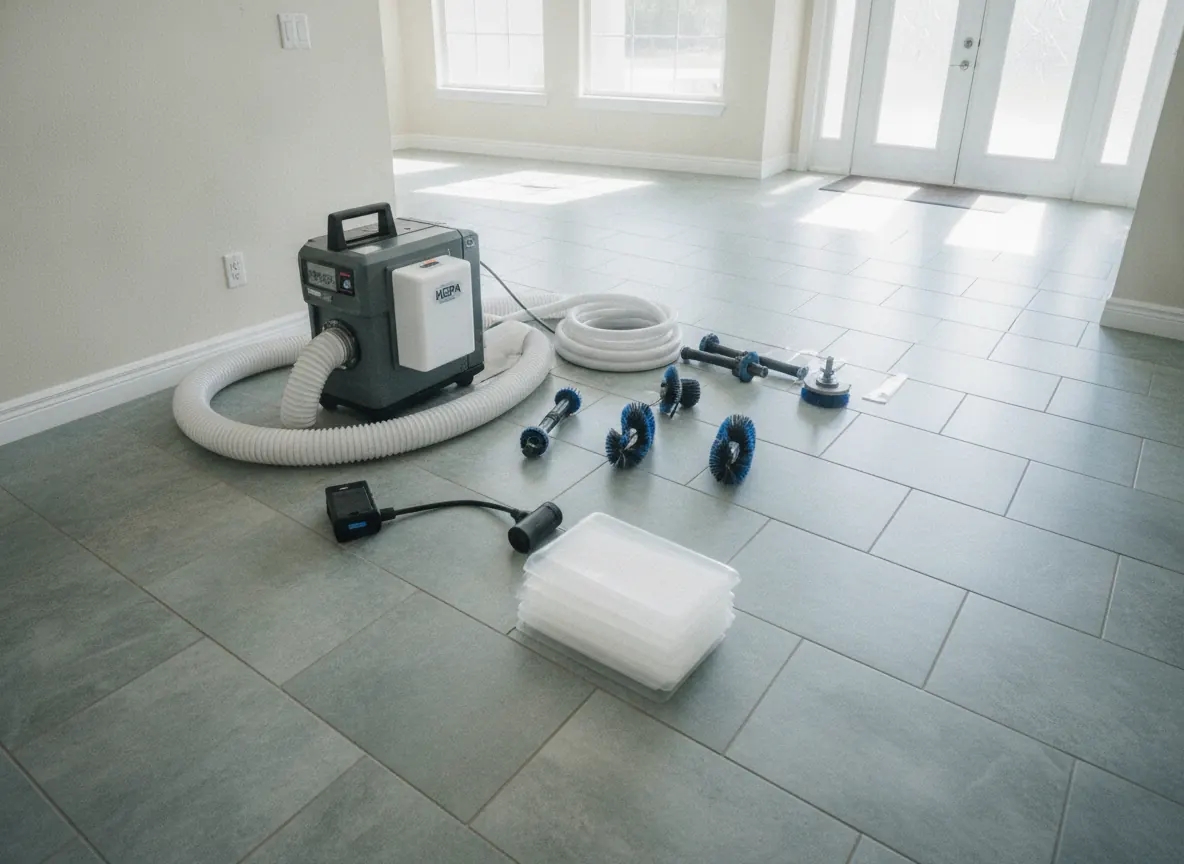
What a NADCA-style source-removal cleaning involves
NADCA, the National Air Duct Cleaners Association, describes source removal as "the most effective way to clean air ducts and ventilation systems." Its standard (the ACR standard) is what EPA points to when it says a provider should "follow NADCA's standards for air duct cleaning." Here's what a licensed AC contractor doing this kind of job will typically do, in order.
Inspection and access
A provider following NADCA-style practice will typically inspect the system first, including checking for asbestos-containing materials, and "open access ports or doors to allow the entire system to be cleaned and inspected," as EPA describes.
Negative pressure
Source removal places the system under negative pressure with a powerful vacuum. NADCA: "While the vacuum draws air through the system, devices are inserted into the ducts to dislodge any debris." Any vacuum that exhausts indoors must be HEPA filtered.
Agitation
NADCA says "a vacuum collection device alone will not get an HVAC system clean." Tools such as brushes, air whips and "skipper balls" loosen debris so the vacuum can capture it. EPA says to use only soft-bristled brushes on fiberglass duct board.
Registers, grilles and components
EPA's definition of duct cleaning includes supply and return ducts, registers, grilles and diffusers, cooling coils, condensate drain pans, the fan motor and housing, and the air handler housing. "Failure to clean a component of a contaminated system can result in re-contamination of the entire system."
Seal and verify
Access holes should be sealed and re-insulated. EPA's test: "All portions of the system should be visibly clean; you should not be able to detect any debris with the naked eye." NADCA agrees: if any dust or debris can be seen, the system shouldn't be considered cleaned.
Flex and duct board in Florida homes. Palm Beach County Consumer Affairs notes that many Florida homes have insulated fiber or flex ducts "which should not be cleaned aggressively," because that can loosen fiberglass. EPA adds that insulated ducts that are wet or moldy "should be removed and replaced," which is a repair or replacement job, not a cleaning. In Orlando's humidity, the coil and drain pan deserve attention too; see AC coil and air handler cleaning.
Sanitizers come last, if at all. EPA says biocides "should only be applied, if at all, after the system has been properly cleaned of all visible dust or debris," and that research hasn't shown they work in duct cleaning. Ask to see the label of anything proposed.
EPA's checklist for hiring a duct cleaner
EPA's consumer guide reminds homeowners: "they are trying to sell you a service, so ask questions and insist on complete and knowledgeable answers." Use this list when you compare quotes:
- Talk to at least three providers and get written estimates.
- Ask them to show you the contamination that justifies cleaning, and "to show you any mold they say exists."
- Don't hire anyone who makes "sweeping claims about the health benefits of duct cleaning" or recommends it as routine maintenance.
- Be wary of claims of EPA certification. "EPA neither establishes duct cleaning standards nor certifies, endorses, or approves duct cleaning companies."
- Confirm the provider will use vacuum equipment that exhausts outside, or HEPA vacuuming if it exhausts inside the home.
- Get "a written agreement outlining the total cost and scope of the job before work begins."
- If a biocide or sealant is proposed, ask why, ask to see the label, and remember EPA says sealant encapsulation isn't routinely recommended by NADCA, NAIMA or SMACNA.
- Florida extra: ask for the company's CAC/CMC license number and check it at MyFloridaLicense.com. A county business tax receipt is not a license. (General information, not legal advice.)
Watch out for "$99 whole house" offers, which NADCA calls a sales gimmick. More in the FAQ and our $99 scam guide.
Orlando Air Duct Pros is a referral service, not a contractor. The steps above describe what independent companies typically do; they aren't a description of work we perform.
Dusty vents or a musty AC smell? Compare quotes.
Free, no-pressure quotes across Orlando, Kissimmee, Winter Park, Sanford and Central Florida.